Frozen Cave Mystery

Caroll Alvarado
| 13-04-2026
 · Travel Team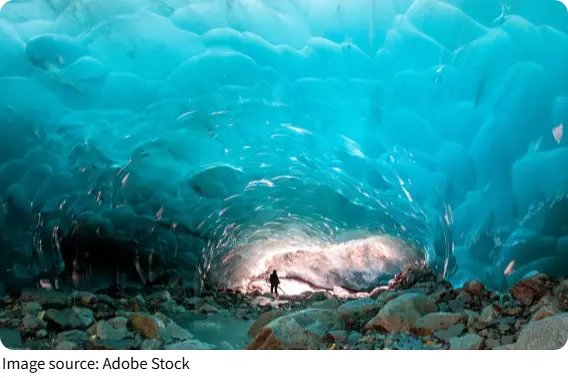
Have we ever come across a place where ice quietly lasts through every season, untouched by the warmth outside? These fascinating ice caves exist in different corners of the world, drawing our attention with their quiet mystery.
Today, we explore them from a global perspective, looking at how natural forces work together to create and protect these frozen spaces. As we learn more, we begin to see how carefully nature balances temperature, structure, and time to shape such incredible environments.
The Unique Geological Structure of Ice Caves
Ice caves are far from ordinary. Their formation depends heavily on specific geological conditions that develop over long periods. Many ice caves are found in high-altitude regions, where the air is naturally cooler and sunlight is less direct, especially on shaded slopes.
Discover Mammoth Hot Springs’ Stunning Terraces – Complete Travel Guide with Tickets, Hotels, Dining & Tips!
Discover the world’s most breathtaking beaches you need to visit now.
A local guide reveals the most magical tulip experiences you can’t miss
Discover São Paulo Like a Local: Tickets, Hotels, Food Prices & Hidden Travel Tips You Need Before Going!
Discover mountain landscapes shaped by generations of careful hands
Trek Through Terraced Hills and Experience Northern Vietnam’s Charm
The shape of the cave is another key factor. A common structure is the “pocket-like” form, where the entrance sits above or in a position that limits the exchange of air. During warmer seasons, outside air is lighter and tends to stay out, while the heavier cold air remains trapped inside. This natural separation helps preserve the ice.
If the cave had a different shape, warm air could easily flow inside, disturbing the cold environment and causing melting. This shows how even subtle differences in structure can determine whether ice survives or disappears.
The Role of Ancient Glacial Activity
To fully understand ice caves, we need to look back into Earth’s long history. In earlier periods, massive glaciers moved across landscapes, carving valleys and reshaping the ground. These glaciers carried large amounts of ice and debris, leaving behind unique formations.
Some researchers suggest that as glaciers advanced, they created hollow spaces beneath or within the terrain. Ice was pushed into these cavities, and over time, these spaces evolved into the ice caves we see today.
Although those glaciers no longer exist in many regions, their influence remains. The ice preserved in caves acts like a natural archive, helping us imagine how the environment once looked and how it has changed over time.
The Mystery of Geothermal Cooling
Another explanation focuses on underground temperature patterns. Normally, we expect temperatures to rise as we go deeper into the Earth. However, in certain areas, the opposite occurs. This phenomenon is called a “negative geothermal anomaly.”
In such cases, underground temperatures remain unusually low compared to the surrounding environment. This creates a natural cooling system that allows ice to form and stay stable. Over time, moisture inside the cave freezes layer by layer, building thick and long-lasting ice formations.
When combined with high elevation and protective cave structures, this cooling effect helps maintain a steady low temperature throughout the year.
Air Circulation: The Invisible Force
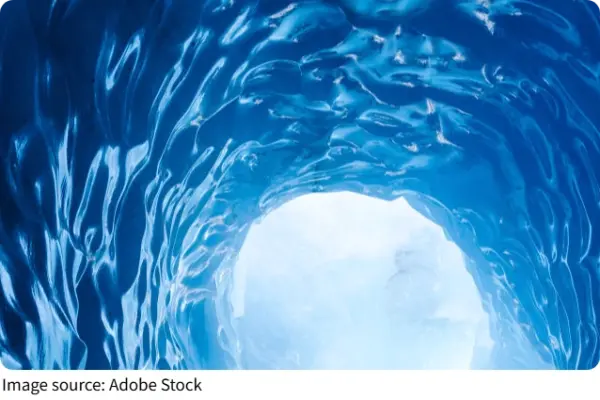
Airflow plays a critical role in shaping the environment inside an ice cave. Even though we cannot see it, it continuously affects temperature and ice formation.
During colder months, outside air becomes cooler than the air inside the cave. This cold air flows inward, lowering the cave’s temperature. As the air cools, moisture condenses and freezes, gradually expanding the ice layers.
When warmer months arrive, the airflow may reverse. However, because of differences between daytime and nighttime temperatures, air continues to move in cycles. This creates a balance between freezing and melting.
As long as freezing happens faster than melting, the ice cave continues to exist and even grow over time.
The Amazing “Summer Ice” Phenomenon
One of the most surprising features of ice caves is the presence of ice during warm seasons. Even when temperatures rise outside, cold air can sink into the cave through its entrance.
As this air cools further, moisture reaches saturation and begins to condense into water droplets, which then freeze. When the temperature difference between the inside and outside increases, more cold air flows, supporting the formation of new ice.
This process shows us that ice caves are not static. They are dynamic systems where temperature, air, and moisture constantly interact in delicate ways.
What Can We Learn From Ice Caves?
Ice caves are more than just beautiful natural sites. They are excellent examples of how geology, climate, and physics come together. Each factor—from cave structure to airflow and underground temperature—plays a vital role.
By studying these caves, we gain a better understanding of natural processes and how environments evolve over time. They also remind us that even small changes in conditions can lead to significant long-term effects.
Let’s Keep Exploring Together
Lykkers, after exploring these frozen wonders, do we feel more curious about the world around us? Ice caves show us that nature always has hidden surprises waiting to be discovered.
Next time we encounter something unusual, let’s take a moment to think about the science behind it. There is always a deeper story to uncover. And as we continue exploring together, who knows what other fascinating mysteries we might find?
Frozen Wonders: Exploring the Majestic Ice Caves of Iceland | World of Science
Video by World of Science